
DOGE Didn’t Fail. It Worked Exactly As Intended.

The quiet damage no one else will talk about, but every federal worker noticed.
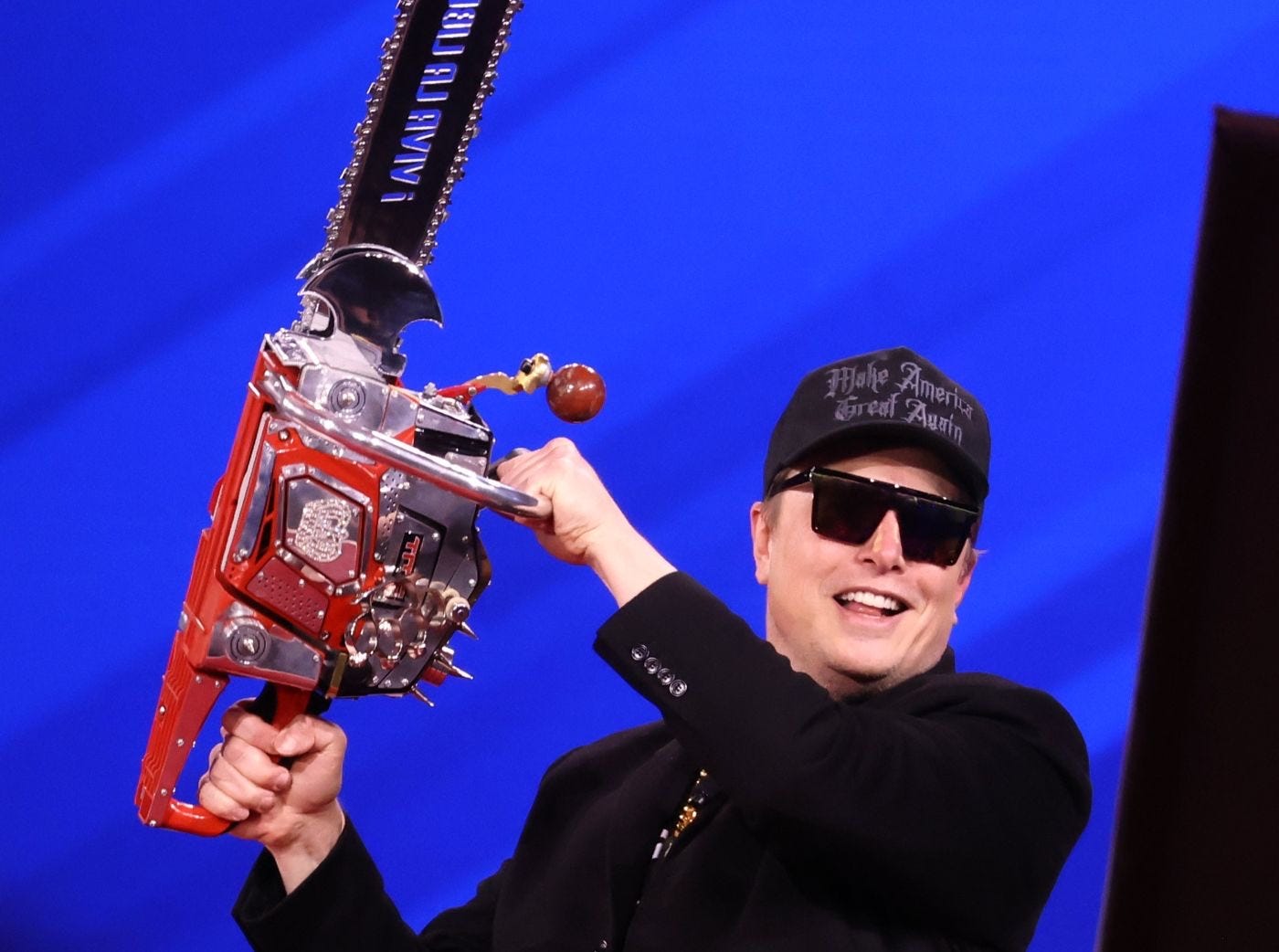
For months, people have argued about whether DOGE “failed.” Whether it collapsed, whether it fizzled out, whether it simply never got off the ground.
But for federal employees, the debate misses the point.
DOGE didn’t fail. It did exactly what it was built to do.
And that is the part no one wants to say out loud.
It Was Never About Savings or Innovation
The public was told this was an initiative to streamline, modernize, and bring efficiency to government. A bold new chapter, a fresh start, a smarter use of tax dollars.
But federal workers recognized the signs immediately.
When something is genuinely designed to succeed, it builds capacity. It hires. It sets up structure. It writes policy. It shores up expertise. It takes the mission seriously.
DOGE never did any of that.
From day one it lacked staffing, clarity, guardrails, and a real operational plan. It drifted because drift was the mission. It stayed vague because vagueness was the shield. It made noise, disrupted operations, destabilized trust, and then quietly disappeared before anyone could meaningfully evaluate it.
That is not failure. That is intention.
Federal Employees Have Seen This Playbook Before
When something is rolled out with fanfare but no infrastructure behind it, federal workers know what is coming.
Mission confusion. Mixed signals. Programs paused or frozen. Partners left wondering whom to talk to. Analysts scrambling for guidance that never arrives. Supervisors asking for updates no one can provide.
We have lived through versions of this pattern across multiple administrations. When the goal is to weaken institutions, you do not need to prove incompetence. You only need to manufacture enough chaos that the system cannot perform.
DOGE did not introduce anything new. It was simply a more aggressive version of a pattern that has been growing louder for years.
The Real Damage Happens Quietly
By the time the public notices that something has gone wrong, federal employees have already been dealing with the fallout for months.
Broken lines of authority. Delayed projects. Confused stakeholders. Eroded trust in American technical and diplomatic leadership. A vacuum where expertise once lived.
This kind of disruption does not show up in headlines. It shows up in the daily work federal employees do to keep the country functioning.
When institutions wobble, we feel it first.
This Was a Warning Shot, Not an Anomaly
DOGE is a preview of what happens when government is treated like a testing ground for ideological experiments. When oversight is portrayed as interference. When expertise is rewritten as elitism. When accountability is reframed as obstruction.
This is not about policy differences. This is about intent.
Federal employees understand the difference between reform and erosion. One strengthens government. The other weakens it under the guise of modernization.
DOGE fell neatly into the second category.
FedFam Will Keep Telling the Truth
If you are reading this, you know that federal workers are not the ones who get to walk away when political projects collapse. We are the ones who stay. We are the ones who rebuild. We are the ones who reassure allies, restore process, and reestablish continuity.
DOGE did not break the federal government. It exposed how easy it is to target it.
And it reminded every public servant why community matters, why solidarity matters, and why our work is still essential even when the structures around us are undermined.
FedFam is here to keep saying what others do not. Federal workers matter. Our institutions matter. And we know what we are looking at when a program is never meant to stand.